Tyres and grip
Banden en grip
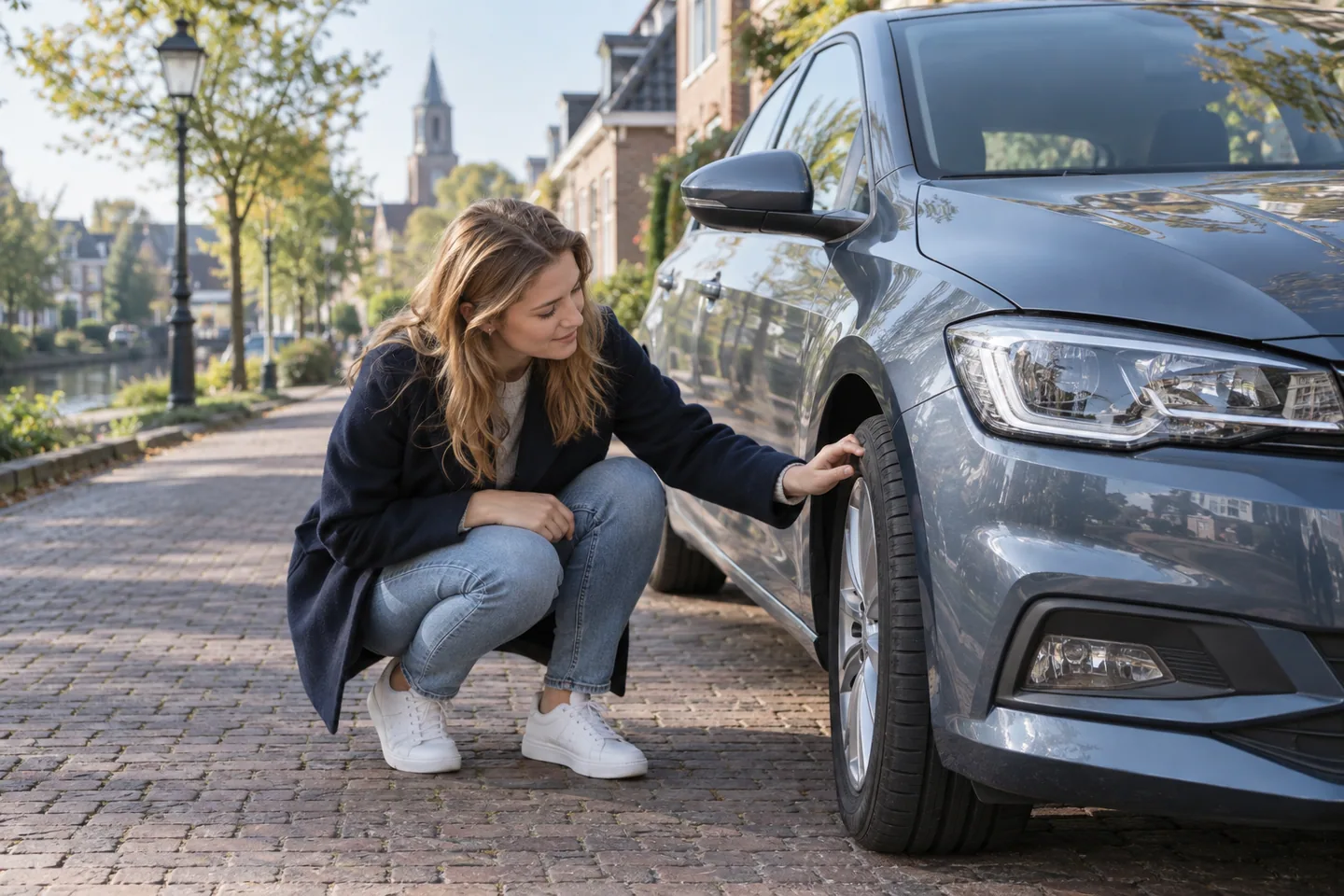
Understand tread, pressure, damage and how weather or load changes the grip available for steering and braking.
Vehicle Knowledge · Voertuigkennis
Build a practical understanding of controls, tyres, visibility, safety systems and loading—so you can recognise both a safe vehicle and an unsafe situation.
Clear English explanations • Dutch terminology included • 15 free questions, no account
Vehicle Knowledge at a glance
Rule
Vehicle Knowledge is less about becoming a mechanic and more about knowing whether a car is ready, safe and legal to use. You should understand the controls available to the driver, recognise important dashboard warnings and know which checks belong before a journey.
The category connects technical details to decisions. A tyre is not just a component: its condition affects grip, braking and stability. A warning lamp is not just a symbol: it tells you whether you can continue, should stop safely or need expert help.
Exam questions often present a photograph or a short situation. Your job is to identify the safety-critical detail, separate it from irrelevant information and choose the action that reduces risk.
Before departure
Set the car, view and load while stationary.
Amber warning
Understand the fault and arrange timely attention.
Red warning
Prioritise a controlled safe stop and investigate.
Guidance
Banden en grip
Understand tread, pressure, damage and how weather or load changes the grip available for steering and braking.
Waarschuwingslampjes
Distinguish routine indicators from warnings that require you to stop safely or arrange inspection.
Zicht
Keep glass, mirrors, lights and wipers usable so you can see clearly and other road users can see your intentions.
Veiligheidssystemen
Know the purpose of seat belts, head restraints, airbags, ABS and driver-assistance systems without treating them as a substitute for attention.
Lading en passagiers
Secure people and objects, protect the driver's view and account for the effect of extra weight on handling and braking.
Bediening en voorbereiding
Adjust the seat, steering wheel and mirrors before moving, and locate essential controls before you need them under pressure.
Guidance
Look for obvious tyre damage, fluid beneath the car, broken lamps and anything blocking the vehicle.
Adjust seat, head restraint, steering wheel and mirrors before starting the journey.
Check that warning lights behave normally and respond to any warning before entering traffic.
Fasten belts, secure children and loads, and keep windows and mirrors clear.
Confirm brakes, steering, lights and wipers respond as expected while it is still safe to stop.
The exam usually rewards the safest usable sequence: inspect, prepare, secure, test, then drive.
Vocabulary
Bandenspanning
Tyre pressure
Use the vehicle manufacturer's recommended pressure for the load.
Profieldiepte
Tread depth
Tread helps water escape and preserves grip.
Waarschuwingslampje
Warning light
Colour and symbol indicate urgency and the system involved.
Hoofdsteun
Head restraint
Correct height helps reduce neck injury in a collision.
Remweg
Braking distance
Vehicle condition, speed, road surface and load all matter.
Lading
Load or cargo
Must not shift, obstruct vision or create danger.
Warning
Why it's wrong: A safety-critical warning can mean the car should not continue until the cause is understood.
Why it's wrong: Set your view before joining traffic; adjusting while driving divides attention.
Why it's wrong: Electronic systems support the driver but cannot create grip or replace observation.
Why it's wrong: An unsecured object can interfere with controls or become dangerous during sudden braking.
Scenario
Scenario 01
During your walk-around, one tyre appears lower than the others.
Exam takeaway: A pre-drive warning is easier and safer to solve before entering traffic.
Scenario 02
A red dashboard warning remains illuminated after the car has started.
Exam takeaway: Respond to urgency without creating a second hazard.
Scenario 03
A tall bag has been placed behind the rear seats and obscures the inside mirror.
Exam takeaway: Prepare the vehicle before the journey, not while moving.
Quick checkpoint
3 questions, answers revealed only after you submit.
Keep going
Stay current
CBRKlaar explains the rules in plain English. For the current legal text and government guidance, use these primary sources.
Answers
You need practical safety knowledge: how to recognise important defects, use controls and decide when a vehicle should not be driven.
Learn the common safety-critical symbols and the meaning of warning colours, then practise applying the safe response.
Yes. Know what they help with, their limits and why the driver remains responsible.
Combine a real walk-around of a familiar car with image-based questions, then review every explanation.
You've learned the rules. Now test them in real CBR-style scenarios.